
Program: Start Your Personal Tax (T1) Preparation Business
Module-3- Understanding Various T-Slips
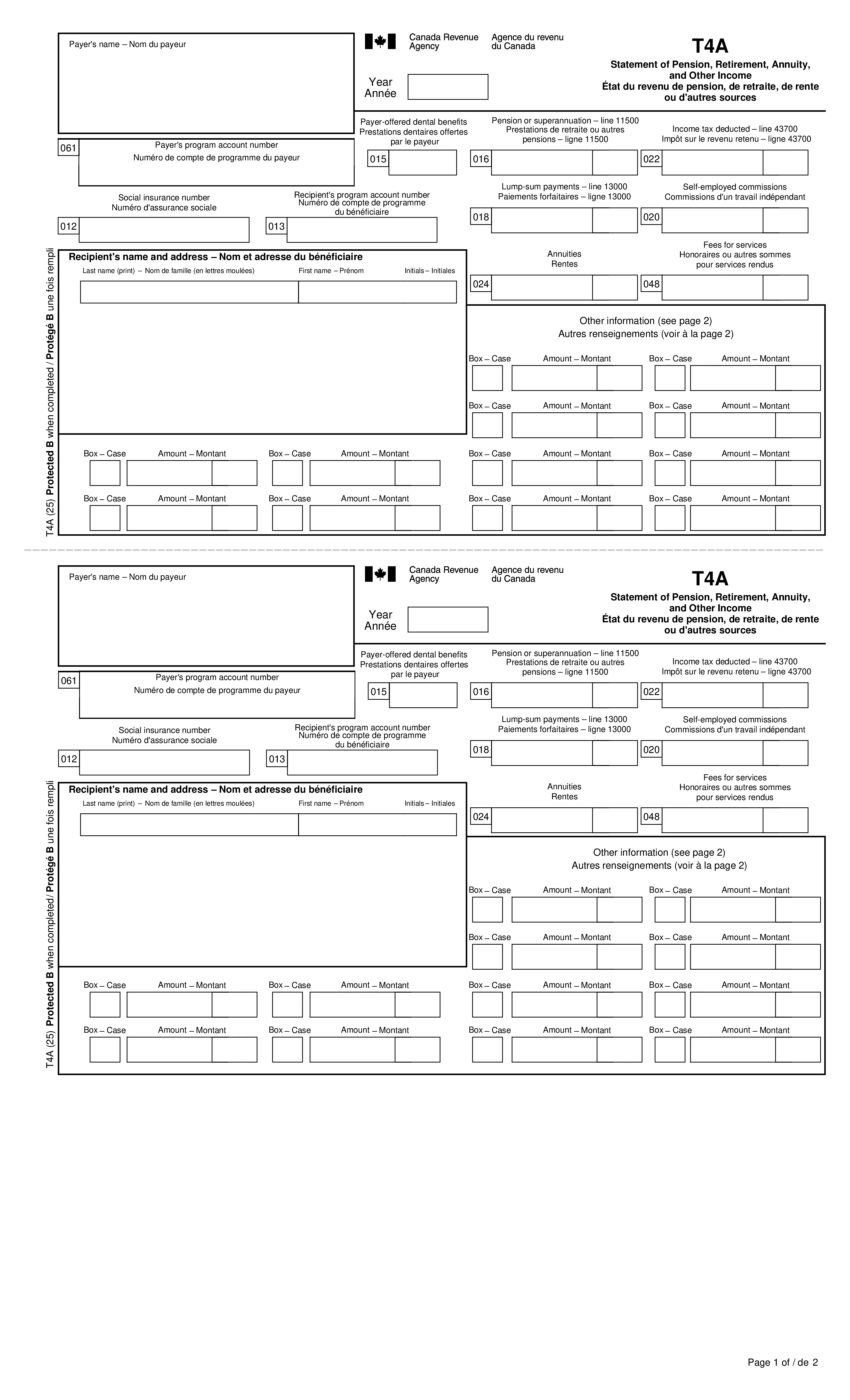
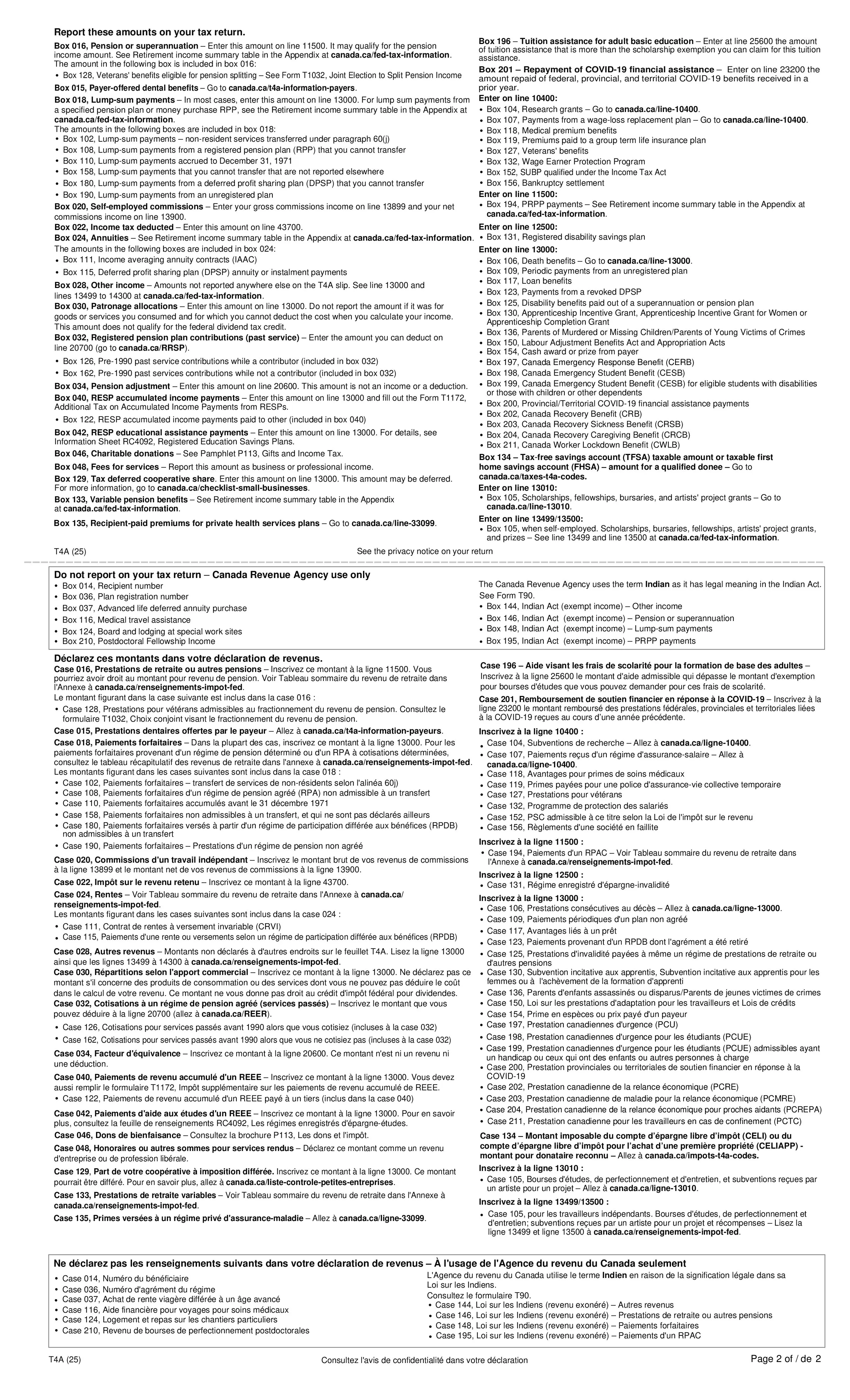
Lesson-M-3-L-1-T4-Employment Income
This Lesson summarize the essential rules every payroll preparer, bookkeeper, or new firm owner must understand when preparing T4 slips for employees.
1. What Is a T4 Slip?
A T4 slip reports all remuneration an employer paid to an employee in a calendar year. Employees use this slip to complete their personal tax returns.
T4s must be issued for:
-Employment income
-Commissions
-Taxable allowances and benefits
-Fishing income
-Any other taxable remuneration
You must issue a T4 if:
-You deducted CPP/QPP, EI, PPIP, or income tax
-OR total remuneration exceeded $500 (unless on the exception list)
2. Identification Section
Year
Enter the calendar year in which the employee was paid.
Employer Name
Use your legal name and operating name (if different), plus address.
Employee Name & Address
Use CAPITAL LETTERS
Last name → First name → Initials
No titles (Mr., Mrs., Director)
Include full home address, province/territory, postal code, and country
3. Box 10 – Province of Employment (POE)
POE is based on where the employee reports for work, not where the employer is located.
Examples:
Employee works remotely in BC → POE = BC
Employee works on an offshore oil rig → POE = ZZ
Employee works outside Canada (not US) → POE = ZZ
If an employee worked in more than one province, issue separate T4 slips.
4. Box 12 – Social Insurance Number (SIN)
Use the SIN provided by the employee
If no SIN → enter 000000000
If employee had a temporary SIN starting with 9 but later received a permanent SIN → use the permanent SIN
Do not issue two T4s
5. Box 28 – Exempt (CPP/QPP, EI, PPIP)
Check the exemption box ONLY if:
-You did not have to deduct CPP/QPP, EI, or PPIP for the entire reporting period
-OR you used an employment code in Box 29
Do not check the box if you reported amounts in the corresponding CPP/EI/PPIP boxes.
6. Box 29 – Employment Codes
Use these only when applicable:
Code Description
11 Placement/employment agency workers
12 Self‑employed taxi or passenger‑vehicle drivers
13 Self‑employed barbers/hairdressers
14 Prescribed salary deferral arrangement withdrawals
15 Seasonal Agricultural Workers Program
16 Detached employee under a social security agreement
17 Self‑employed fishers
If none apply → leave blank.
7. Box 45 – Employer‑Offered Dental Benefits
Mandatory for 2023 onward.
Codes:
1-Not eligible for any dental coverage
2-Employee only
3-Employee, spouse, and dependent children
4-Employee and spouse
5-Employee and dependent children
Important notes:
-Report eligibility, not whether the employee used or declined coverage
-If employee left before Dec 31 → use code 1
-HSAs count only if they cover dental services
-Union‑provided benefits are reported only if the employer is involved in providing them
8. Box 14 – Employment Income
Report total employment income before deductions.
Includes:
Salary, wages, commissions
Bonuses, vacation pay
Taxable benefits
Controlled tips
Wage‑loss replacement benefits
Non‑qualifying SUBP top‑ups
EBP payments
Board and lodging (code 30)
Travel benefits (code 32/33)
Automobile benefits (code 34)
Low‑interest loan benefits (code 36)
Security option benefits (code 38 or 90)
Do not include:
-Retiring allowances (codes 66/67/69)
-Tax‑exempt First Nations income
-Income reported under employment codes 11–17
-Qualifying SUBP payments (reported on T4A)
9. CPP/QPP and CPP2/QPP2 Contributions
Box 16 – CPP Contributions
Use when POE is not in Quebec.
Box 16A – CPP2 Contributions
Use for second‑tier CPP contributions (2024 onward).
Box 17 – QPP Contributions
Use when POE is Quebec.
Box 17A – QPP2 Contributions
Use for second‑tier QPP contributions (2024 onward).
Key rules:
-If you report CPP/QPP contributions, you must also report pensionable earnings in Box 26
-Over‑deductions must be reported unless reimbursed
-Under‑deductions are corrected separately (not on the T4)
10. Box 18, 22, 24,26
Box 18 – EI Premiums
Report EI premiums deducted.
If you report EI premiums, you must also report insurable earnings in Box 24.
Box 22 – Income Tax Deducted
Report the total federal and provincial tax withheld.
Box 24 – EI Insurable Earnings
Usually equals employment income unless:
-Certain benefits are excluded
-Employee is non‑arm’s‑length
-Employee worked in Quebec (different EI rules)
Box 26 – CPP/QPP Pensionable Earnings
Often equals Box 14, but can differ in cases such as:
-Non‑cash benefits
-Quebec‑specific rules
-CPP2/QPP2 thresholds
10. Box 18, 22, 24,26
Box 18 – EI Premiums
Report EI premiums deducted.
If you report EI premiums, you must also report insurable earnings in Box 24.
Box 22 – Income Tax Deducted
Report the total federal and provincial tax withheld.
Box 24 – EI Insurable Earnings
Usually equals employment income unless:
-Certain benefits are excluded
-Employee is non‑arm’s‑length
-Employee worked in Quebec (different EI rules)
Box 26 – CPP/QPP Pensionable Earnings
Often equals Box 14, but can differ in cases such as:
-Non‑cash benefits
-Quebec‑specific rules
-CPP2/QPP2 thresholds
11. Special Situations to Know
Multiple provinces → separate T4s
Detached employees → use code 16
Overpayments → report only if not repaid or repaid without performing duties
Tax‑exempt First Nations income → use code 71 or 88
Emergency volunteers → taxable portion in Box 14; exempt portion (up to $1,000) in code 87 Board/lodging at special work sites → use code 31 (tax‑exempt)
12. Common Errors to Avoid
Incorrect POE (Box 10)
Missing dental benefit code (Box 45)
Reporting CPP/QPP without pensionable earnings
Incorrect EI insurable earnings
Reporting retiring allowances in Box 14
Using Box 28 incorrectly
Not issuing multiple T4s for multiple provinces
13. Key Takeaways
The T4 slip is a legal reporting document — accuracy matters
Always match deductions with corresponding insurable/pensionable earnings
Understand special situations to avoid CRA reassessments
Consistency across all slips for the same employee is essential
Program: Start Your Personal Tax (T1) Preparation Business
Module-3- Understanding Various T-Slips
Lesson-M-3-L-2-T4A-Pension and Other Income
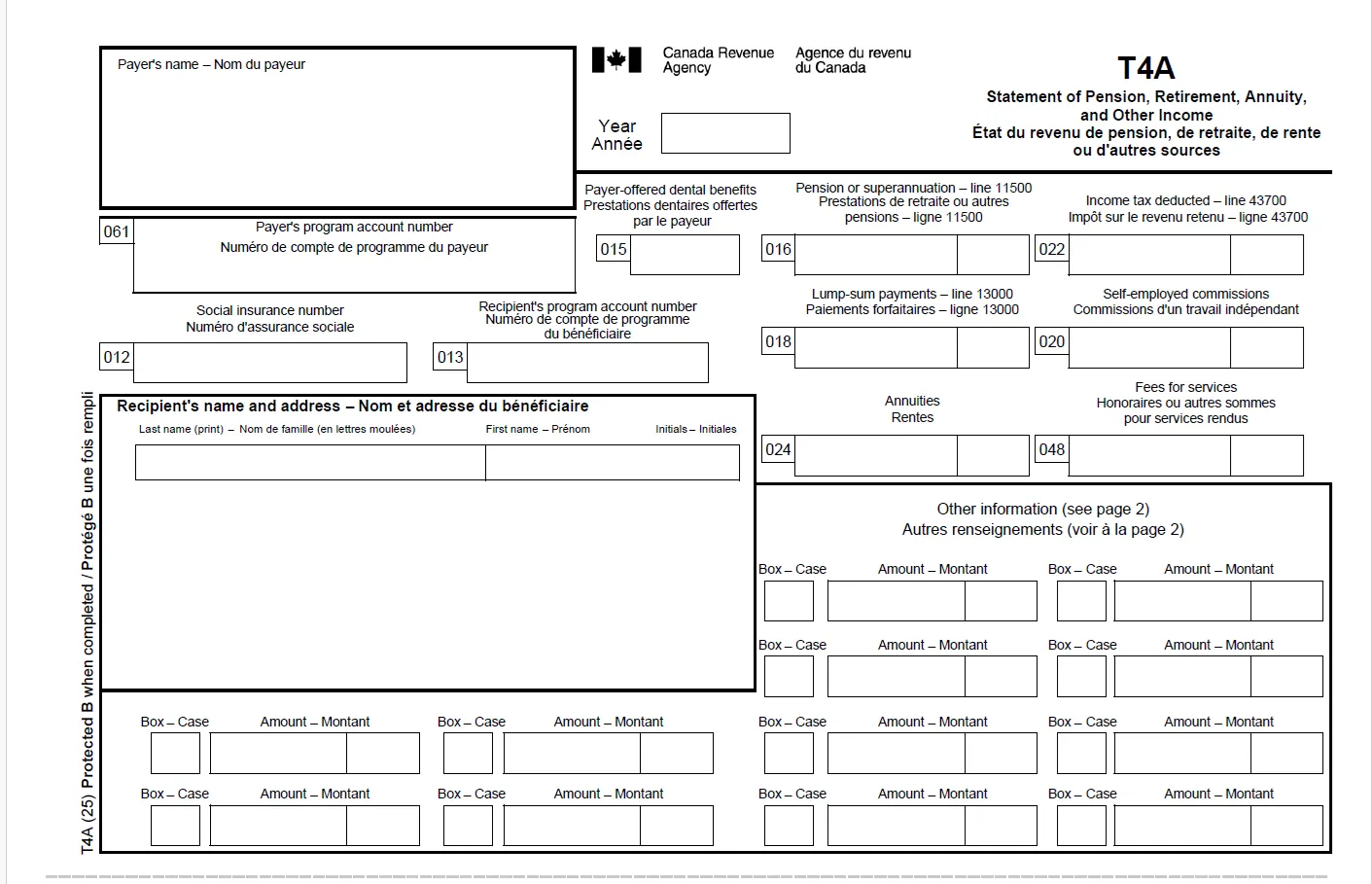
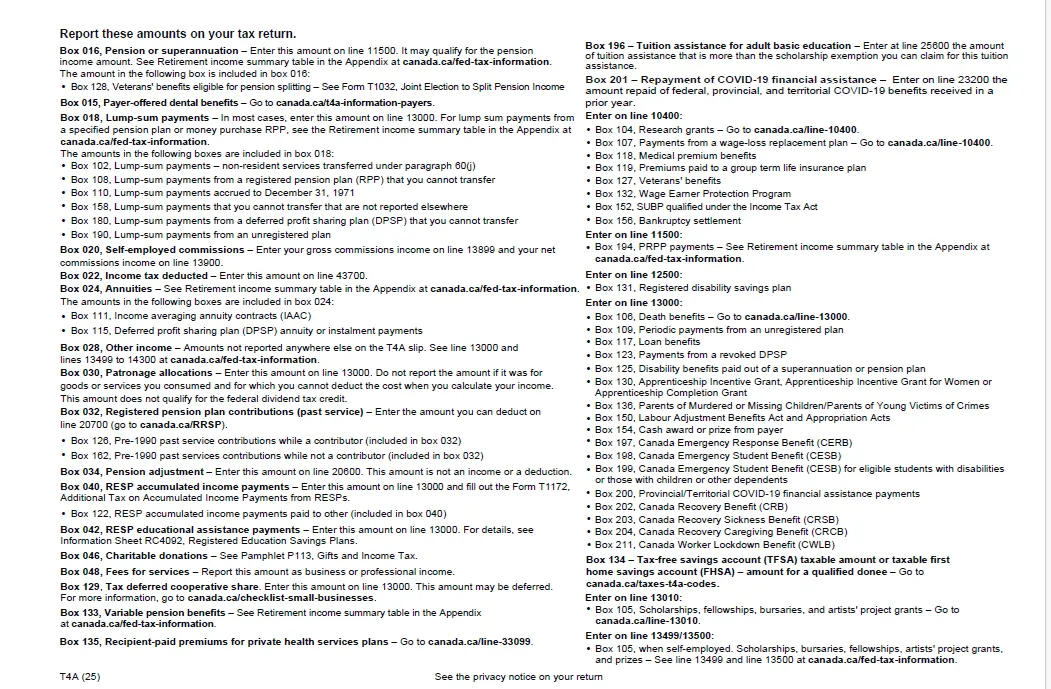
These lessons summarize the essential rules that every bookkeeper, payroll preparer, and firm owner must understand when preparing T4A slips for contractors, pension recipients, students, retirees, and other recipients of non-employment income.
1. What Is a T4A Slip?
A T4A slip reports various types of income that are not employment income. It is used for payments such as:
-Self‑employed commissions
-Fees for services
-Pension or superannuation
-Lump‑sum payments
-RESP payments
-Scholarships, bursaries, and grants
-Certain benefits and allowances
Employees receive T4s.
Contractors, retirees, students, and other recipients may receive T4As.
2. When Must You Issue a T4A?
You must issue a T4A if:
You deducted income tax from any payment
OR total payments exceeded $500 (unless on the exceptions list)
Payers include:
Employers
Trustees
Estate executors/liquidators
Administrators
Corporate directors
Pension plan administrators
3. Identification Section
Year
Enter the calendar year the payment was made.
Payer Name
Use your legal name and operating name (if different).
Recipient Name & Address
CAPITAL LETTERS Last name → First name → Initials
No titles (Mr., Mrs., Director)
Full home address, including province, postal code, and country
Do not put recipient numbers in the address area
4. Box 012 – Social Insurance Number (SIN)
-Enter the SIN provided
-If no SIN → enter 000000000
-If a temporary SIN (starts with 9) is replaced by a permanent SIN → use the permanent SIN
-Do not issue two slips
-If the recipient is a business, do not use a SIN → use Box 013
5. Box 013 – Recipient’s Program Account Number
Use this when the recipient is:
-A sole proprietor
-A partnership
-A corporation
Enter their business number (e.g., 123456789RT0001).
6. Box 015 – Payer‑Offered Dental Benefits
Mandatory only when Box 016 (pension/superannuation) is filled.
Codes:
1 — Not eligible
2 — Recipient only
3 — Recipient, spouse, and children
4 — Recipient and spouse
5 — Recipient and children
Important notes:
-Report eligibility, not usage
-HSAs count if they cover dental services
-Union‑provided benefits are reported only if the employer/pension plan is involved
-Code 1 is optional for 2023–2024 under administrative relief
7. Box 016 – Pension or Superannuation
Report:
-Taxable annuity payments from RPPs
-Disability benefits are paid as a life annuity
-Veterans’ benefits are eligible for pension splitting
-Periodic payments from unregistered pension plans (in specific cases)
Do not report:
-Non‑annuity disability benefits (use code 125)
-Other veterans’ benefits (use code 127)
-Tax‑exempt First Nations pension income (use code 146)
-RCA payments (use T4A‑RCA)
-EBP payments (use T4)
8. Box 018 – Lump‑Sum Payments
Report taxable lump‑sum payments from:
RPPs
DPSPs
Unregistered pension plans
ALDAs
Over‑contribution reimbursements
Lump‑sum death benefits
Non‑resident service pension payments
DPSP allocations or reallocations
Do not report:
Direct transfers to RRSP/RRIF/RPP/PRPP (use Form T2151)
Tax‑exempt First Nations lump‑sums (use code 148)
9. Box 020 – Self‑Employed Commissions
Report commissions paid to independent agents.
Do not include GST/HST or PST.
10. Box 022 – Income Tax Deducted
Report only if you actually withheld tax.
Do not report:
-Garnishment amounts
-Requirement‑to‑pay amounts for past tax arrears
11. Box 024 – Annuities
Report annuity payments from:
RRSP refunds of premiums
LIFs and RRIFs
ALDAs
IAACs
DPSPs (annuity or instalments)
Do not report:
Pension/superannuation annuities (use Box 016)
VPLA payments (use code 133)
Life insurance policy annuities (use T5)
Payments to non‑residents (use NR4)
12. Box 048 – Fees for Services
Report fees paid for services other than employment.
Do not include:
-GST/HST or PST
-Payments that belong in Box 020 (commissions)
Special rule (2025+):
The trucking industry must report fees paid to CCPCs over $500.
13. Box 061 – Payer’s Program Account Number
Enter your 15‑character payroll account number on CRA copies only.
Do not include it on the recipient’s copy.
14. Other Information Codes (014–210)
The T4A has many additional codes. Students should understand the most common categories:
Income Types
028 — Other income
030 — Patronage allocations
040 — RESP accumulated income
042 — RESP educational assistance
046 — Charitable donations
104 — Research grants
105 — Scholarships, bursaries, fellowships
106 — Death benefits
107 — Wage‑loss replacement plan payments
117 — Loan benefits
118 — Medical premium benefits
119 — Group term life insurance premiums
Pension & Retirement‑Related
032 — RPP past service contributions
034 — Pension adjustment (MEP only)
036 — Plan registration number
037 — ALDA purchase
109 — Periodic payments from unregistered plans
110 — Pre‑1971 lump‑sum payments
115 — DPSP annuity payments
133 — Variable pension benefits
190 — Lump‑sum from unregistered plans
First Nations Exempt Income
144 — Other exempt income
146 — Exempt pension/superannuation
148 — Exempt lump‑sum payments
195 — Exempt PRPP payments
Education & Grants
130 — Apprenticeship grants
131 — RDSP payments
196 — Adult basic education tuition assistance
210 — Postdoctoral fellowship income
COVID‑19 Related
200 — COVID‑19 assistance
201 — Repayment of COVID‑19 assistance
15. Common Errors to Avoid
Reporting employment income on a T4A instead of a T4
Using Box 016 incorrectly for non‑annuity disability benefits
Forgetting Box 015 when Box 016 is filled
Reporting GST/HST in commission or fee amounts
Reporting direct transfers as income
Using the wrong code for First Nations exempt income
Reporting tax withheld when none was deducted
16. Key Takeaways
T4A slips cover a wide range of non‑employment income
Always match the payment type to the correct box or code
Dental benefit reporting applies only when pension/superannuation is reported
Many codes exist — accuracy depends on understanding the category
Consistency and documentation protect both payer and recipient
Program: Start Your Personal Tax (T1) Preparation Business
Module-3- Understanding Various T-Slips
Lesson-M-3-L-3-T5-Investment Income (Interest and Dividends)
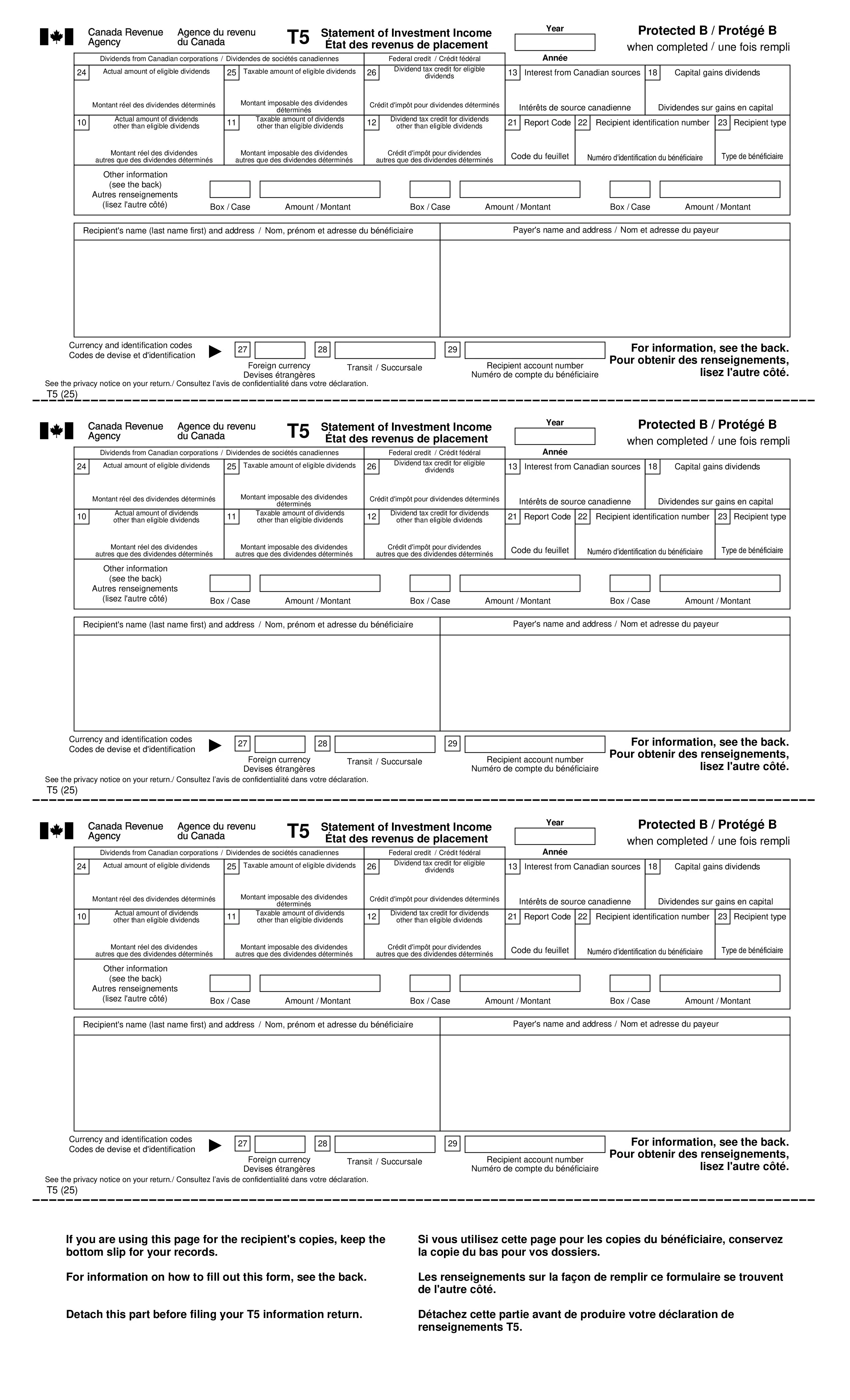
The T5 slip is used to report investment income paid to individuals, corporations, trusts, and other entities. These notes summarize the essential rules every bookkeeper, payroll preparer, and firm owner must understand when preparing T5 slips.
1. Purpose of the T5 Slip
A T5 slip reports investment income such as:
-Interest
-Dividends
-Capital gains dividends
-Royalties
-Certain annuity income
-Foreign income and foreign tax paid
It is used when the payer must report income from Canadian or foreign investment sources.
2. Recipient Name & Address
General Rules
Enter information in the white area provided.
If multiple recipients are entitled to the income (e.g., joint account), only one T5 slip is required.
Enter both names if two individuals share the income.
For corporations, trusts, associations, or institutions → enter the entity name, not an individual’s name.
Joint Accounts
Prepare one slip for the group. Include:
Primary representative’s name
Secondary representative (if known)
Primary representative’s SIN in Box 22
Code 2 in Box 23 to indicate a joint account
Special Recipient Types
Payments to a trust → use the trust name, not beneficiaries.
Payments to a registered holder (e.g., RRSP trustee) → use the registered holder’s name.
Formatting
First line: Last name → First name → Initials
Second line: Second recipient (if applicable)
Next lines: Full mailing address (city, province, postal code)
3. Payer Name & Address
Enter the payer’s full legal name and address on every T5 slip.
4. Year
Enter the calendar year in which the investment income was earned.
5. Dividends from Canadian Corporations
Dividends may be:
-Eligible dividends
-Other than eligible dividends
Dividends retain their character even when passed through another corporation.
Boxes 10, 11, 12 — Dividends Other Than Eligible Dividends
Box 10: Actual amount of dividends (non‑eligible)
Box 11: Taxable amount (actual + 15% gross‑up)
Box 12: Dividend tax credit (9/13 of gross‑up)
Do not include:
Credit union dividends (treated as interest)
Eligible dividends
Capital gains dividends
MIC dividends (reported in Box 13)
Boxes 24, 25, 26 — Eligible Dividends
Box 24: Actual amount of eligible dividends
Box 25: Taxable amount (actual + 38% gross‑up)
Box 26: Dividend tax credit (15.0198% of Box 25)
6. Box 13 – Interest from Canadian Sources
Report interest from:
Registered bonds/debentures
Money loaned or deposited with corporations, institutions, partnerships, trusts
Investment dealer accounts
Insurance policy interest
Expropriation compensation
Blended payments (interest portion)
Credit union dividends (non‑listed shares)
MIC taxable dividends (non‑capital gains)
Do not include:
Foreign interest (Box 15)
Interest paid by individuals (private mortgages)
Bank loan interest
Accrued annuity income (Box 19)
7. Other Information Area (Boxes 14–30)
This section contains blank boxes where you enter codes and amounts. If more than 3 codes apply → issue an additional T5 slip.
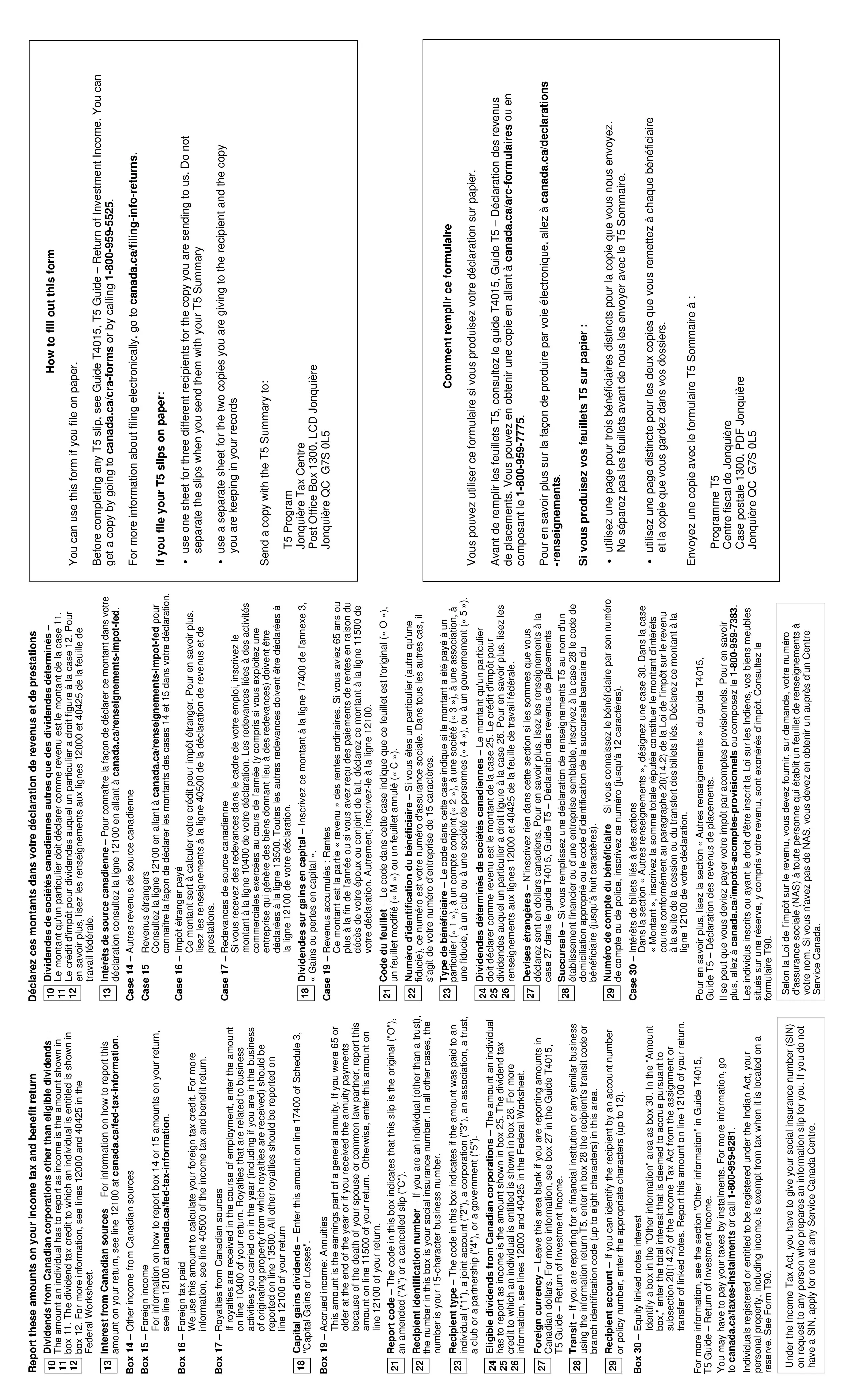
Box 14 – Other Income from Canadian Sources
Includes:
Dividends from non‑taxable Canadian corporations
Life insurance policy income
Eligible funeral arrangement (EFA) refunds
Box 15 – Foreign Income
Report gross foreign income in Canadian dollars
Include foreign spin‑off shares
Box 16 – Foreign Tax Paid
Report foreign tax withheld
Used by the recipient to claim foreign tax credits
Box 17 – Royalties
Payments for use of intellectual property or natural resources
Box 18 – Capital Gains Dividends
From:
Investment corporations
Mortgage investment corporations
Mutual fund corporations
Box 19 – Accrued Income: Annuities
Includes:
Accrued earnings on life insurance policies
Pre‑1990 annuity income
Box 21 – Report Code
Indicates slip status:
O – Original
A – Amended
C – Cancelled
Box 22 – Recipient Identification Number
SIN for individuals
Trust account number for trusts
Business number for corporations/partnerships
Box 23 – Recipient Type
Codes:
1 — Individual
2 — Joint account
3 — Corporation
4 — Association, trust, club, partnership
5 — Government or international organization
Box 27 – Foreign Currency
Use ISO currency codes (USD, EUR, GBP, etc.)
Only one currency per slip
If left blank → CRA treats amounts as CAD
Box 28 – Transit Code
Used by financial institutions.
Box 29 – Recipient Account Number
Optional account or policy number.
Box 30 – Equity‑Linked Notes Interest
Report deemed interest from linked notes under subsection 20(14.2).
8. Key Takeaways
T5 slips report investment income, not employment income.
Joint accounts require special handling (Box 22 + Box 23).
Dividends must be classified correctly as eligible or other than eligible.
Foreign income and foreign tax must be reported separately.
The “Other information” area contains many specialized codes — accuracy matters.
Always use the correct recipient type and identification number.